

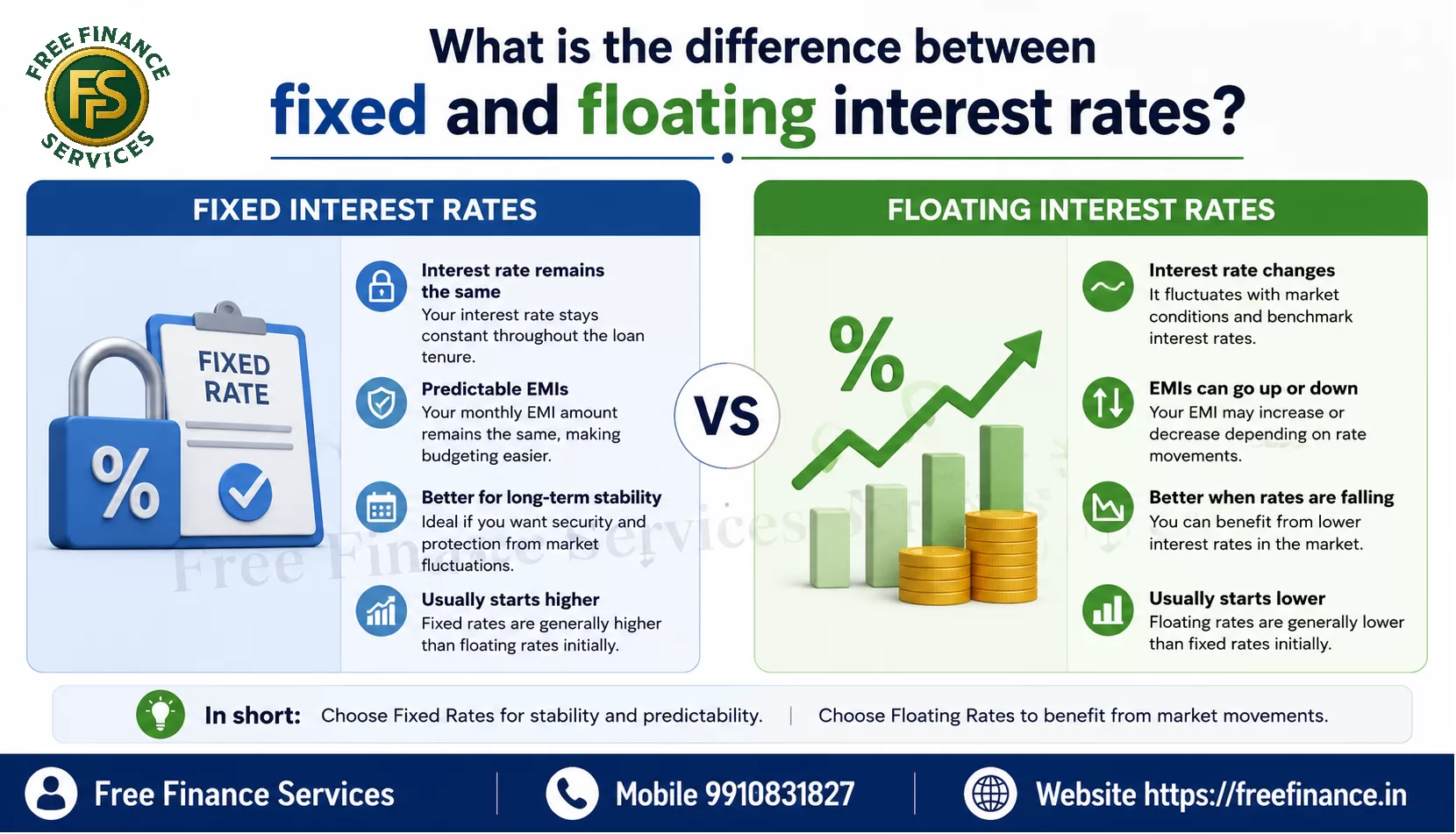

When applying for a loan, one important decision you must make is choosing between a fixed interest rate or a floating interest rate. 🎯🏦 This choice can significantly impact your repayment amount and financial planning! Let’s dive deep into what they mean and how they differ. 🌟
🔒 What is a Fixed Interest Rate?
A fixed interest rate remains constant throughout the entire loan tenure. It means your monthly EMI (Equated Monthly Installment) will stay the same, regardless of changes in the market interest rates. 📈⛔
✅ Advantages of Fixed Interest Rates:
- 🔹 Predictable monthly payments – no surprises!
- 🔹 Easier budgeting and financial planning
- 🔹 Protection against rising market rates
⚠️ Disadvantages of Fixed Interest Rates:
- 🔸 Higher initial rates compared to floating rates
- 🔸 No benefit if market rates fall during your loan tenure
- 🔸 Prepayment penalties are sometimes higher
🌊 What is a Floating Interest Rate?
A floating interest rate (also known as a variable rate) changes over time based on market conditions. 📉📈 It is typically linked to an external benchmark like the RBI Repo Rate or MCLR (Marginal Cost of Funds based Lending Rate).
✅ Advantages of Floating Interest Rates:
- 🔹 Lower initial interest rates compared to fixed rates
- 🔹 Benefit when market rates go down
- 🔹 Lower prepayment or foreclosure charges
⚠️ Disadvantages of Floating Interest Rates:
- 🔸 Monthly EMIs can fluctuate, making budgeting harder
- 🔸 Risk of paying more if market rates increase
- 🔸 Financial uncertainty over the loan period
🔍 Key Differences at a Glance
| Aspect | Fixed Interest Rate | Floating Interest Rate |
|---|---|---|
| Rate Stability | Constant throughout the loan | Changes as per market trends |
| EMI Amount | Fixed EMI | Variable EMI |
| Risk Factor | Low | High |
| Market Benefit | No | Yes, when rates fall |
| Prepayment Charges | Usually higher | Usually lower |
🤔 Which One Should You Choose?
Choosing between fixed and floating interest rates depends on your risk appetite, market outlook, and financial stability. 🏦💡
- 👉 If you prefer certainty and stability, and believe rates might rise, fixed rate loans are better.
- 👉 If you can manage some fluctuation and expect rates to fall, go for a floating rate loan.
- 👉 Some lenders also offer a hybrid option – fixed for initial years and floating thereafter. 🌀
🏁 Final Words
Both fixed and floating interest rates have their pros and cons. Analyze your financial goals, study the current economic trends, and consult a loan advisor if needed. 🎯✅
Taking a smart decision today can save you a lot of money tomorrow! 🌟💸
Need guidance on choosing the right loan type? We are here to help!
📱 Call us – 9910831827